Walkways in Murrells Inlet for connecting outdoor spaces without standing water or cracking
Pathways That Stay Safe in Wet Conditions
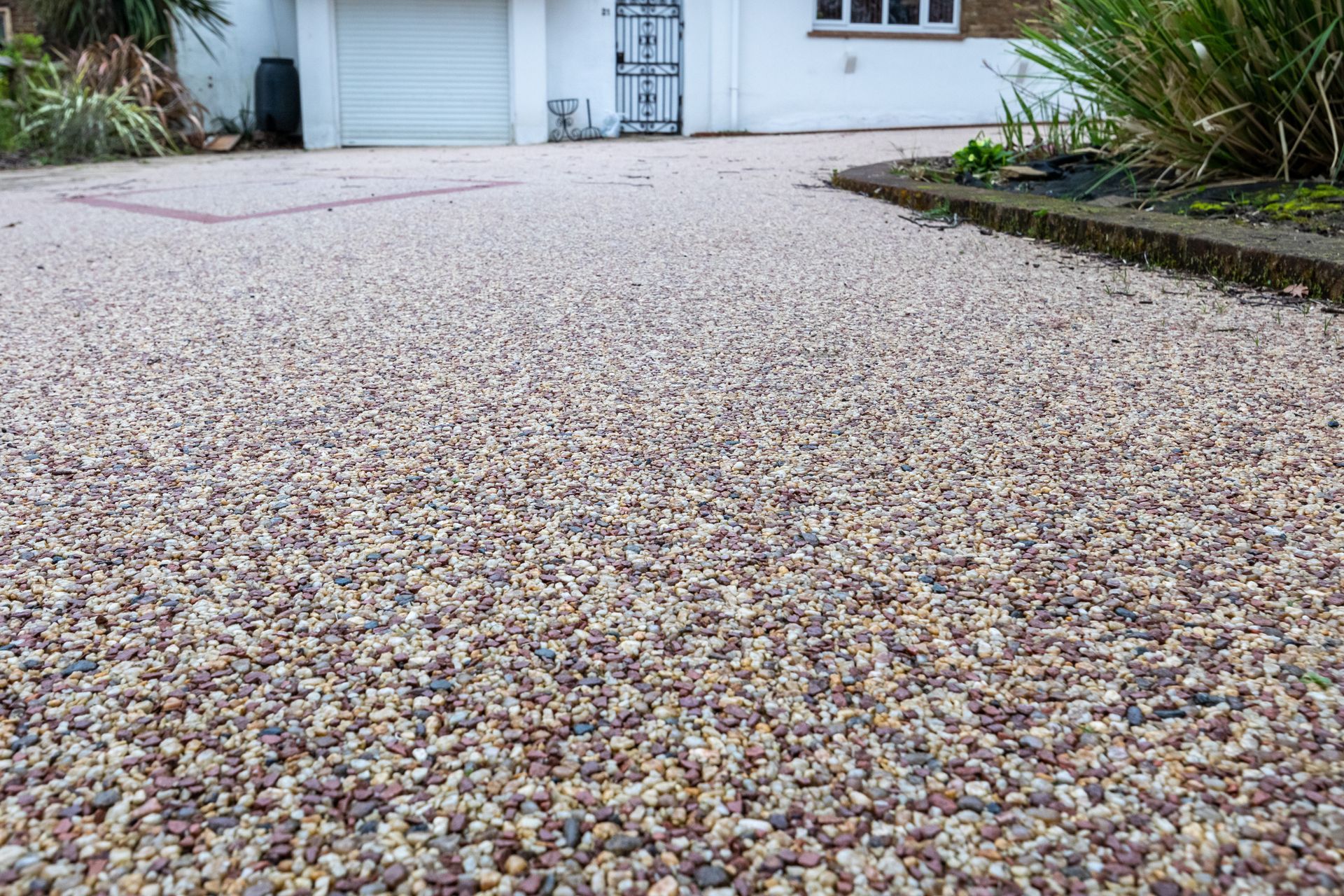
Smooth walkway surfaces reduce tripping hazards while providing slip resistance that matters during wet weather common throughout coastal areas. Resin Rock of Myrtle Beach creates these pathways using permeable resin-bound stone that drains water through the surface rather than leaving it to pool or create slick spots. The system addresses the drainage problems that cause traditional concrete walkways to develop standing water in low spots and the cracking that occurs when tree roots grow underneath solid surfaces.
Installation begins with proper base preparation that includes grading for drainage and compacting aggregate substrate to prevent settling. The resin-stone mixture is then applied and troweled to create a smooth but textured finish that provides traction without the rough surface of exposed aggregate concrete.
Request a site visit to discuss pathway routing and custom design options that integrate with your landscaping.
Resin-bound walkways create continuous paths without the expansion joints that collect debris and allow weed growth between sections of traditional concrete. The material flexes slightly with minor ground movement rather than cracking, which matters in areas with active tree roots or expansive clay soils that shift with seasonal moisture changes.
Water drains through the pathway surface immediately rather than running off into adjacent planting beds or creating erosion channels alongside the walkway. The surface stays visually consistent without the color variation that develops when sections of concrete cure under different weather conditions or the moss growth that darkens shaded portions of solid pavements.
Color customization allows walkways to coordinate with existing hardscape elements like patio surfaces or driveway borders. Curved pathway sections are formed during installation without visible seams, and width transitions happen smoothly without steps or elevation changes that create accessibility problems.
Answers to Frequent Service Questions
Pathway projects raise specific questions about durability and design flexibility, particularly for properties with existing landscaping.
What base preparation prevents settling and cracking over time?
Proper installation requires removing organic soil to a depth of four to six inches, compacting aggregate base material in layers, and ensuring positive drainage slope away from building foundations.
How do permeable walkways manage water in areas with poor natural drainage?
The system allows water to infiltrate through the pathway into the base layer where it disperses laterally into surrounding soil, preventing the surface puddles common with impermeable concrete in low-lying areas around Murrells Inlet.
When does it make sense to replace concrete walkways versus overlay them?
Replacement works best when existing concrete has settled more than one inch, shows extensive cracking, or lacks proper slope for drainage, while overlay suits walkways with minor surface wear but stable bases.
What width works best for main pathways versus secondary garden paths?
Primary walkways connecting driveways to entries typically require 48-inch width for comfortable two-way traffic, while garden paths function well at 30 to 36 inches for single-file access.
How does the surface texture affect wheelchair or stroller use?
The smooth troweled finish provides enough texture for slip resistance while remaining even enough for wheeled mobility aids to roll without vibration or resistance.
Resin Rock of Myrtle Beach designs walkway systems that improve property accessibility and visual flow between outdoor spaces. Schedule a consultation to review your property's specific routing needs and discuss finish options suited to your use patterns.