Driveways That Drain Without Puddling
Driveways in Murrells Inlet for properties with standing water and cracked concrete surfaces
Driveways that collect water after rain create tracking problems into garages and accelerate surface deterioration from repeated freeze-thaw cycles. Resin Rock of Myrtle Beach installs permeable resin-bound stone driveways that allow water to pass through the surface rather than sitting in low spots or running off into landscaping. The system works particularly well for properties on clay soils common throughout the Murrells Inlet area, where traditional concrete often settles unevenly and cracks within five to seven years of installation.
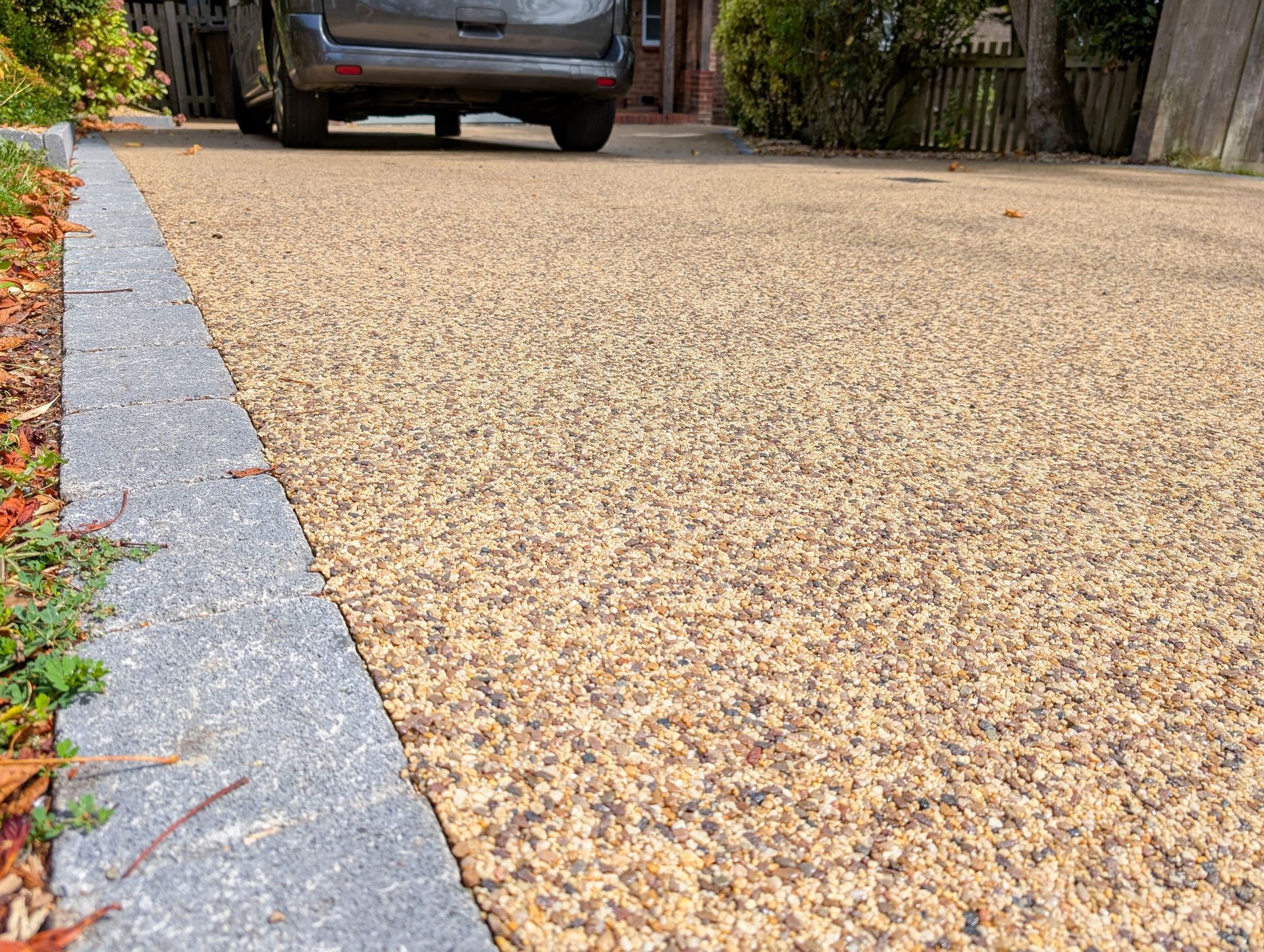
The installation bonds natural stone with UV-stable resin over a prepared concrete base, creating a surface that handles daily vehicle traffic while maintaining open pores for water drainage. Proper surface preparation includes repairing structural cracks and ensuring adequate slope toward drainage areas before the resin layer is applied.
Arrange a property assessment to evaluate your current driveway condition and discuss color options that complement your home's exterior.
The resin system creates a monolithic surface without expansion joints where weeds grow or water infiltrates and freezes. Each square foot of properly installed permeable driveway drains water at rates exceeding 60 inches per hour, which prevents the pooling that causes concrete spalling and asphalt pothole formation during winter months.
After the installation cures, rainwater no longer runs off your driveway into storm drains or adjacent properties, and you'll see the surface dry to the touch within minutes of storms passing. The material resists automotive fluid stains better than porous concrete and doesn't develop the tire track wear patterns common with asphalt surfaces.
The system works for both full driveway replacements and overlay applications where the existing concrete base remains structurally sound. Edge transitions to existing concrete aprons or garage floors are integrated during installation to prevent trip hazards and maintain proper drainage flow.
Common Questions About This Service
Homeowners replacing driveways want to understand how the material performs under actual use conditions and what the installation involves.
What surface preparation determines whether overlay or full replacement is needed?
If the existing concrete shows active settling, structural cracks wider than one-quarter inch, or significant surface spalling, full removal and base reconstruction provides better long-term performance than overlay applications.
How does the surface handle vehicle weight and turning forces?
The resin-bound stone achieves compressive strength comparable to standard concrete when properly installed over a stable base, handling passenger vehicles and light trucks without surface damage or material displacement.
When should driveway work be scheduled in the Murrells Inlet area?
Installation requires temperatures above 50 degrees during application and curing, making spring through fall the optimal window, though coastal South Carolina's mild winters often allow winter installation during extended warm periods.
What color options work best for concealing dirt and tire marks?
Mid-tone earth colors in tan, gray, or brown ranges show less contrast with typical road dirt while still providing enough lightness to reflect heat during summer months.
How long before vehicles can use the new surface?
Initial foot traffic is safe within 24 hours, while vehicle traffic should wait 48 to 72 hours depending on ambient temperature and humidity levels affecting cure time.
Resin Rock of Myrtle Beach provides detailed estimates that account for your existing driveway condition and required base work. Contact our team to review your specific property layout and discuss custom color selections that improve curb appeal.