Workshop Surfaces That Handle Daily Impact
Garage Floors in Murrells Inlet for spaces with oil stains and worn concrete surfaces
Garage floors absorb automotive fluids, develop tire marks, and show wear patterns from repeated vehicle movement and tool use. Resin Rock of Myrtle Beach applies durable floor coatings that resist staining and create a polished finish that improves lighting and usability in work spaces. The system addresses the concrete dusting problem where bare garage floors constantly shed fine powder that tracks into vehicles and living spaces, along with the surface pitting that develops from chemical exposure and impact damage.
Installation requires thorough concrete surface preparation using diamond grinding equipment to open the concrete pores and remove existing sealers or contaminants. The resin coating is then applied in multiple layers to build thickness that handles vehicle weight and tool drops while creating the glossy finish that brightens garage interiors.
Arrange an evaluation to assess your current floor condition and discuss color options that improve your garage's appearance.
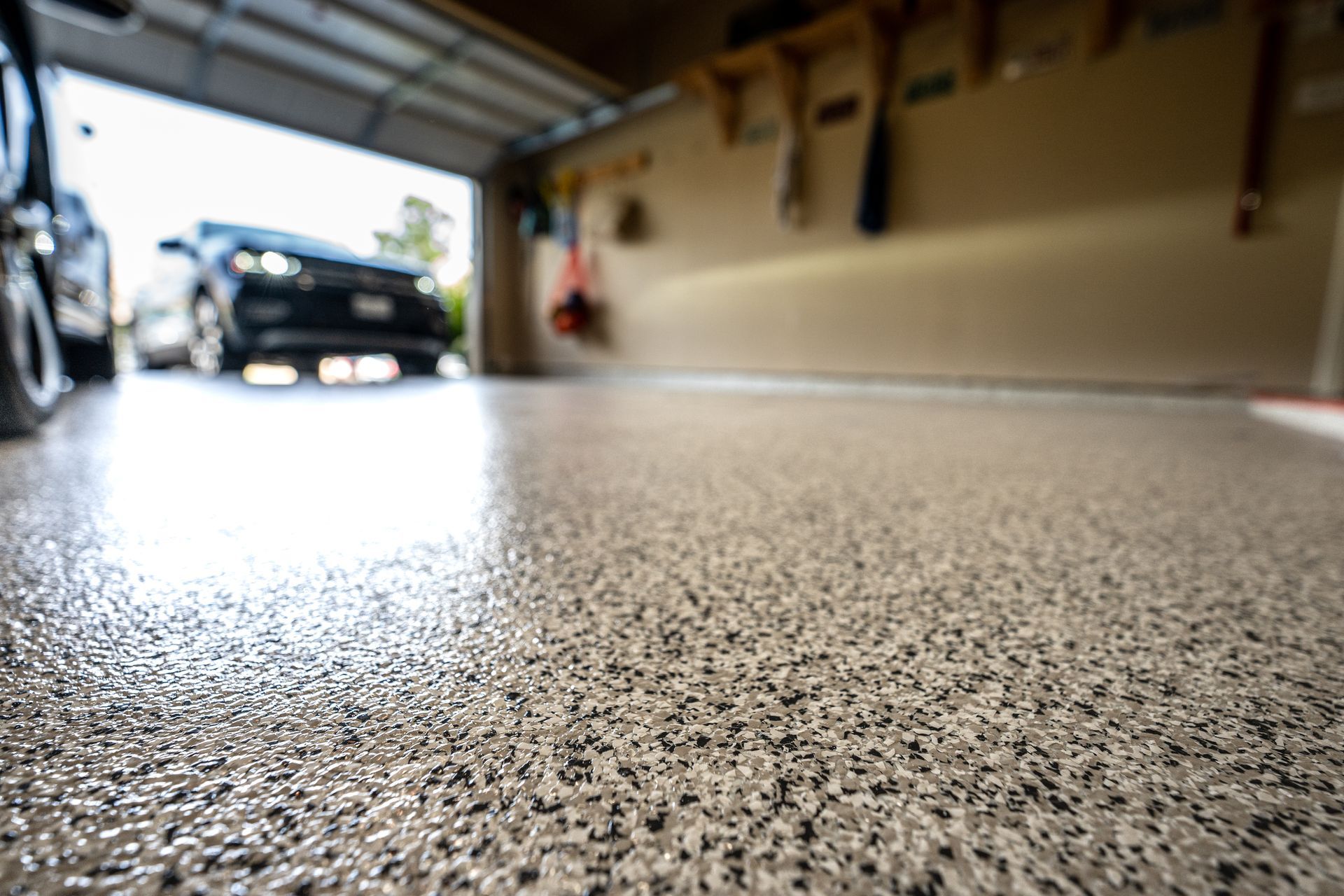
Proper garage floor preparation includes acid etching or mechanical grinding to create surface profile that allows chemical bonding between the concrete and resin layers. Resin Rock of Myrtle Beach fills any cracks or surface damage before applying the base coat, then adds the finish layer with custom color selections and optional decorative flake systems.
The completed floor repels oil, grease, and automotive fluids rather than absorbing them into the concrete, which means spills wipe clean without leaving permanent stains. Surface dust no longer generates when vehicles drive across the floor, and the glossy finish reflects overhead lighting to improve visibility for detailed work.
The coating system includes options for slip-resistant texture in areas where water or snow melt from vehicles might create traction concerns. Color customization allows coordination with wall paint or storage systems, and decorative flake additions create visual interest while helping conceal minor dirt between cleanings.
Questions Before Starting Your Project
Garage floor coating raises practical questions about durability and the installation timeline that affects vehicle storage.
What surface preparation determines coating performance and longevity?
Diamond grinding removes the top layer of concrete to expose aggregate and create mechanical bond points, while also eliminating existing sealers, paint, or oil contamination that would prevent proper adhesion.
How long before vehicles can return to the garage after coating?
Initial foot traffic is safe within 24 hours, while vehicle traffic should wait 72 hours for full cure, though heavy equipment or hot tire traffic from vehicles driven immediately before parking should wait a full week.
What happens to existing cracks in the concrete floor?
Structural cracks are filled with flexible epoxy compounds that move with minor slab movement, while the coating system bridges hairline cracks and prevents them from expanding through repeated thermal cycling common in garage environments.
How does the coating handle thermal expansion in unheated garages around Murrells Inlet?
The resin system flexes with normal concrete expansion and contraction from temperature changes, maintaining bond integrity through seasonal temperature swings typical in coastal South Carolina garages.
What custom color options work best for concealing dirt and tire marks?
Mid-tone gray and tan colors show less contrast with typical road dirt and tire residue, while decorative flake systems in multi-color blends create visual texture that disguises minor surface dust.
Resin Rock of Myrtle Beach installs garage floor systems for residential workshops and light commercial spaces requiring durable, maintainable surfaces. Contact us to review your garage floor condition and discuss coating options suited to your specific use requirements.