Floors Designed for High-Traffic Business Environments
Commercial Resin Floor Coating in Conway for retail, hospitality, and industrial spaces requiring durable, low-maintenance surfaces
High-traffic commercial floors take constant abuse from foot traffic, carts, equipment, and spills, which means the coating must bond aggressively to the substrate and resist both impact and chemical damage without requiring frequent repairs or downtime. Resin Rock of Myrtle Beach installs commercial-grade resin floor coatings in Conway for businesses that need surfaces capable of handling daily operations while remaining safe, clean, and visually consistent. If your current floor is cracking, staining, or creating slip hazards, a resin coating addresses those failures by creating a seamless, nonporous surface that stands up to the conditions causing the damage.
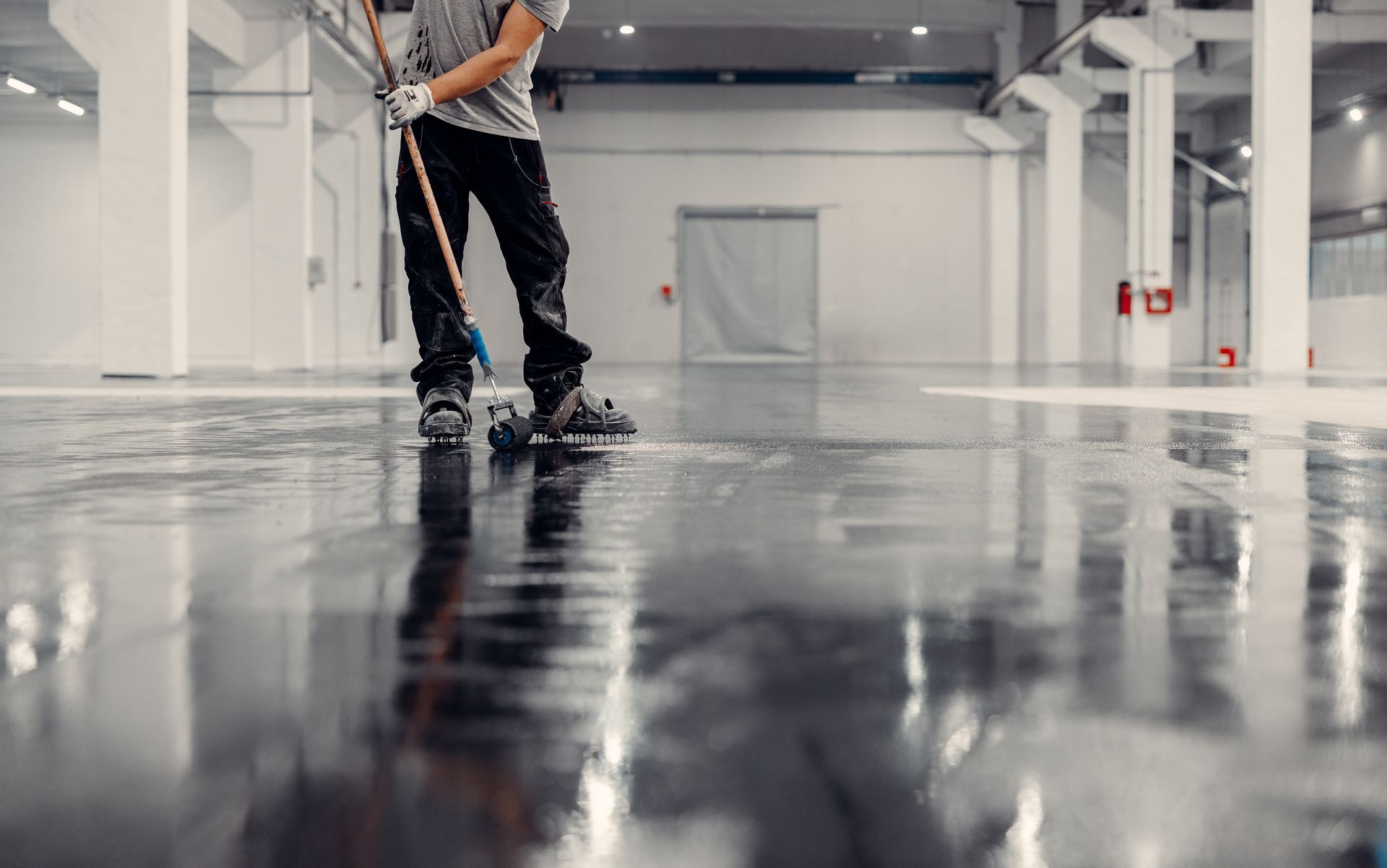
The coating process involves mechanical surface preparation to remove existing sealers, contaminants, and weak concrete layers, followed by crack repair and leveling to create a stable base that won't telegraph imperfections through the new coating. Resin is applied in multiple layers, with slip-resistant additives broadcast into the topcoat for areas where wet conditions or food service create fall risks. Custom finishes are available to match branding or functional needs, and the installation is phased when necessary to keep portions of the business operational during curing.
Arrange an on-site evaluation to assess current floor conditions and discuss coating options suited to your business operations and traffic patterns.
The resin creates a chemical bond with the concrete substrate, forming a wear layer that resists abrasion from wheeled carts, pallet jacks, and constant foot traffic without flaking or delaminating. Slip resistance is engineered into the surface by adding silica or aluminum oxide particles to the wet resin, which creates traction even when the floor is wet from spills or mopping. The nonporous finish prevents liquids, oils, and cleaning chemicals from soaking into the concrete, which eliminates staining and makes spills easy to wipe up without leaving residue or odors.
Once cured, the floor becomes noticeably easier to maintain because dirt and debris no longer embed in the concrete pores, and routine mopping or scrubbing removes surface contamination without requiring harsh solvents or repeated scrubbing. The coating also seals out moisture, which prevents the concrete from dusting or spalling in environments with fluctuating humidity like those common in Conway's climate. Businesses notice reduced cleaning time and lower maintenance costs because the surface doesn't degrade or require periodic resealing like untreated concrete or tile grout.
The coating is designed to handle thermal expansion and minor substrate movement without cracking, which makes it suitable for spaces with HVAC cycling or seasonal temperature shifts. For retail and hospitality environments, the finish can be customized with brand colors or decorative flake additives that create visual interest while maintaining durability. Installation timelines are coordinated to minimize business disruption, with work scheduled during off-hours or phased across sections so the space remains partially operational throughout the project.
Questions Before Starting Your Project
Business owners in Conway often ask about surface preparation, curing times, and how the coating performs under specific operational conditions.
What preparation is required before the resin coating is applied?
The existing floor is mechanically ground or shot-blasted to remove sealers and open the concrete pores, cracks are filled with epoxy or resin-based filler, and the surface is vacuumed and cleaned to eliminate dust and contaminants that would interfere with bonding.
How long before the floor can handle full business traffic after coating?
Light foot traffic is safe within 24 hours, but heavy equipment, pallet jacks, and wheeled carts should be kept off the surface for at least 72 hours to allow complete curing and maximum hardness to develop.
Why does this coating resist chemical spills better than standard sealers?
The resin forms a continuous, nonporous layer that prevents liquids from penetrating the surface, whereas sealers are thinner and more porous, allowing oils, solvents, and cleaning agents to soak through and damage the concrete underneath.
What slip resistance options are available for wet environments?
Slip-resistant aggregates like fine silica or coarse aluminum oxide can be broadcast into the topcoat to create varying levels of traction, with the texture chosen based on how much moisture the floor will encounter during normal operations in Conway retail or food service spaces.
How is the coated floor maintained once it's installed?
Routine sweeping and damp mopping with neutral pH cleaners keep the surface clean, and periodic scrubbing with an auto-scrubber removes embedded dirt, though abrasive pads and harsh chemicals should be avoided to preserve the finish and slip resistance.
Resin Rock of Myrtle Beach provides detailed project proposals based on floor size, current condition, and operational requirements. Contact us to discuss how commercial resin floor coating addresses your specific business needs and minimizes downtime during installation.